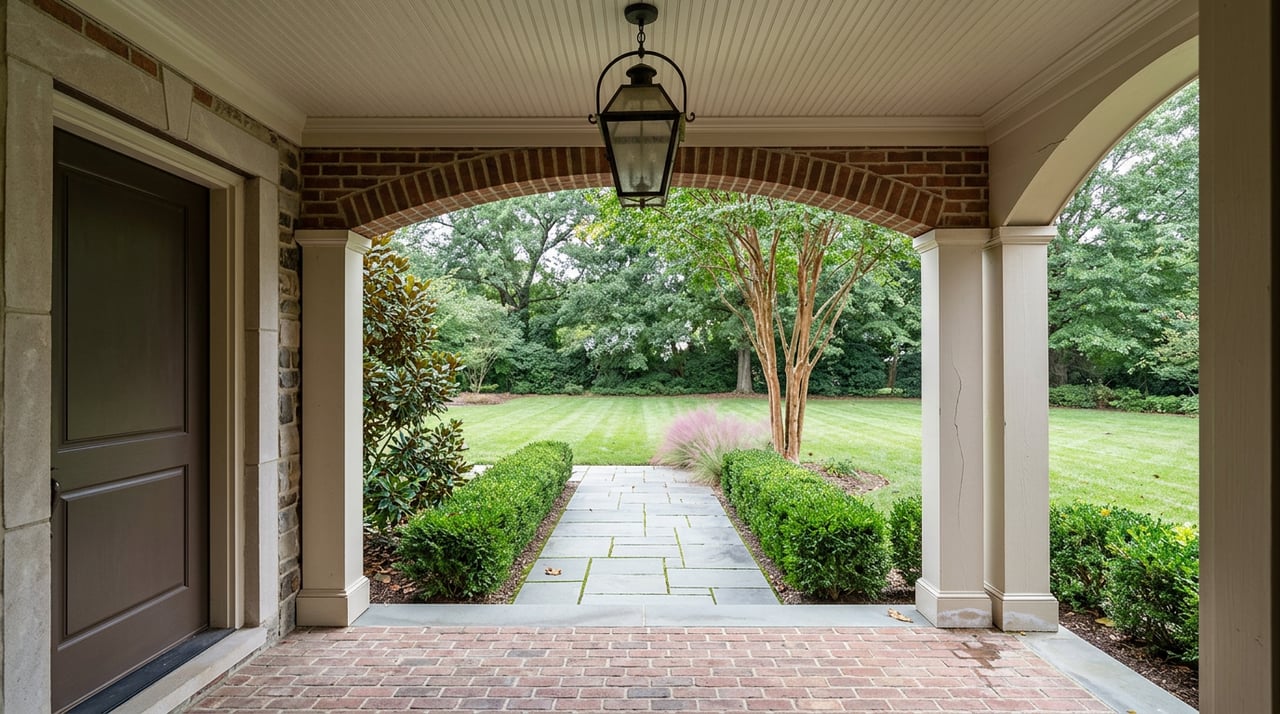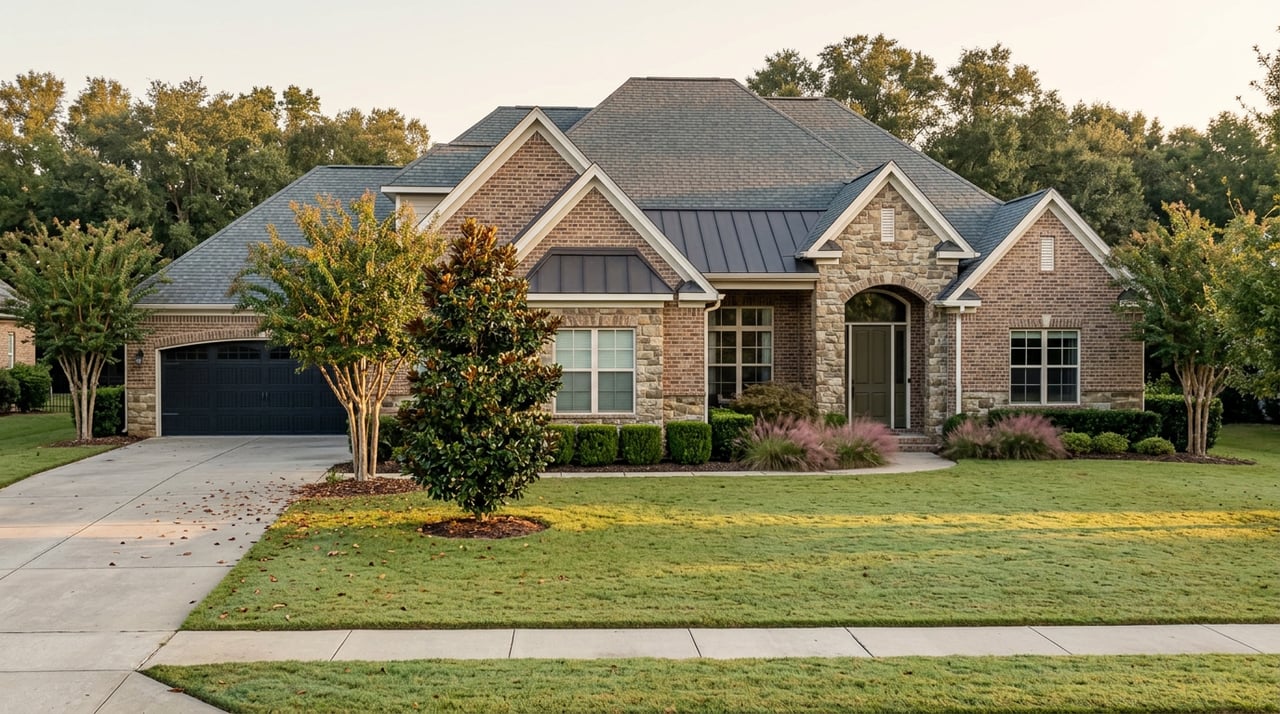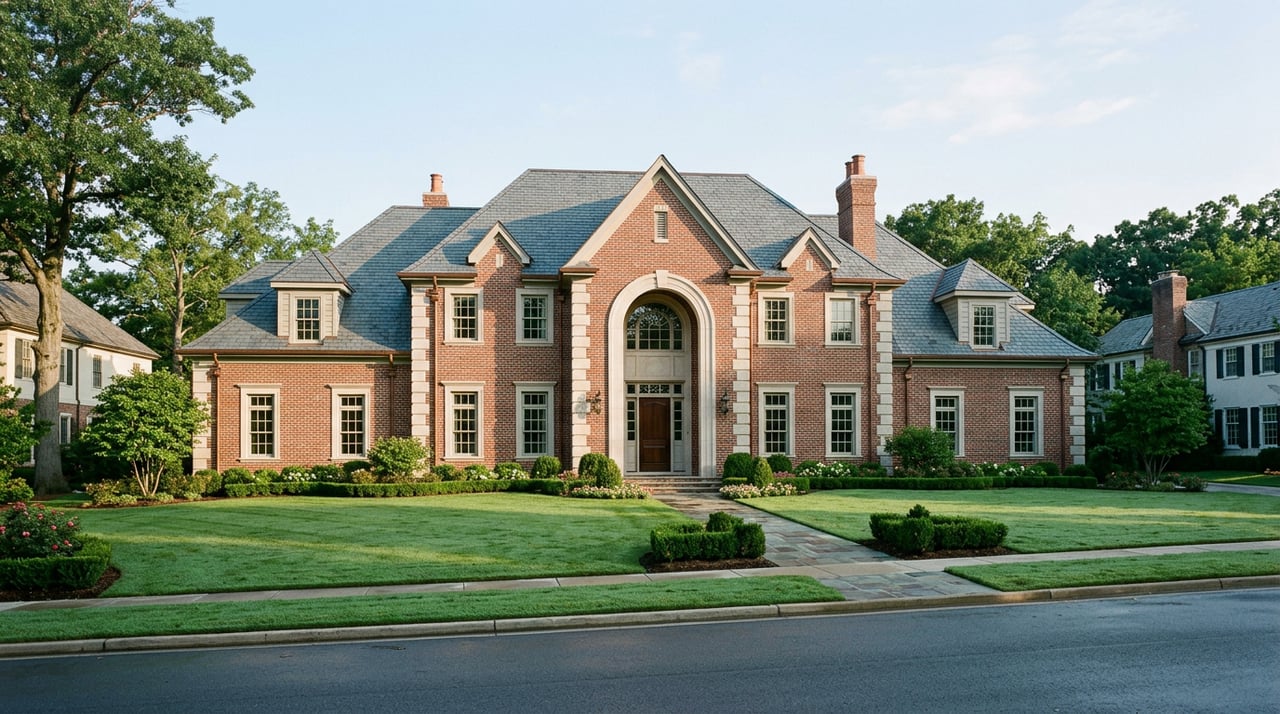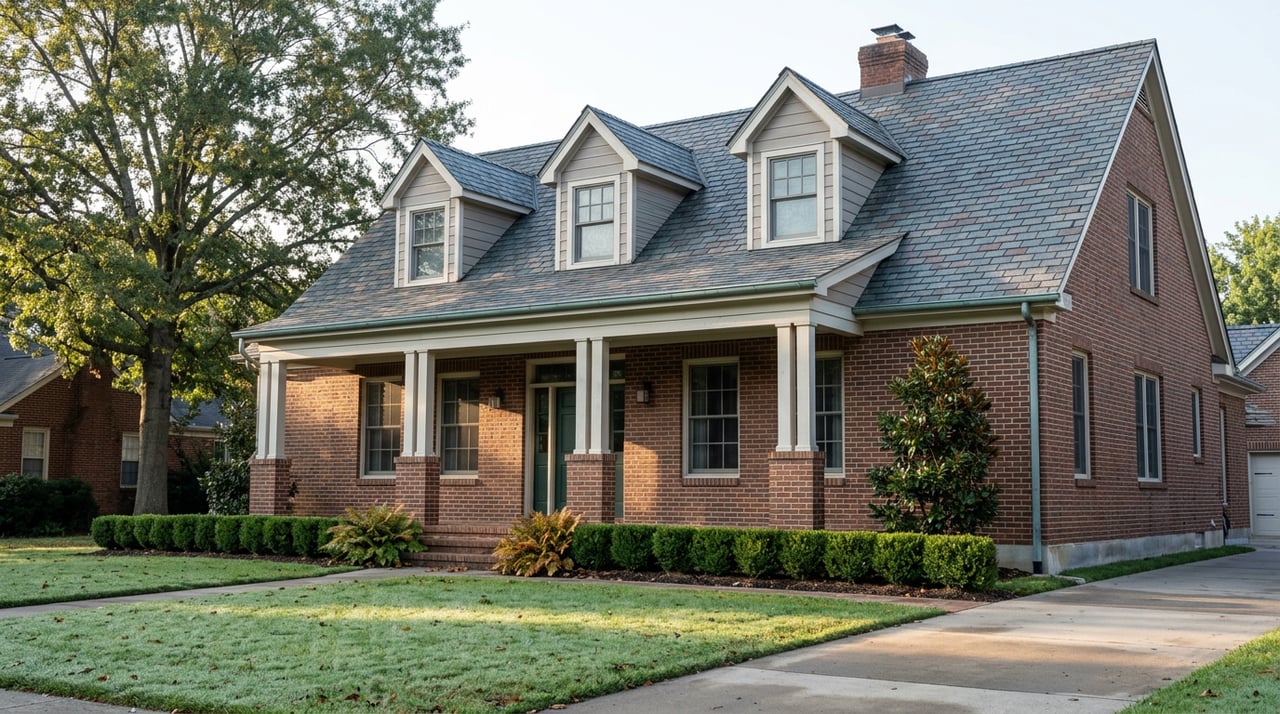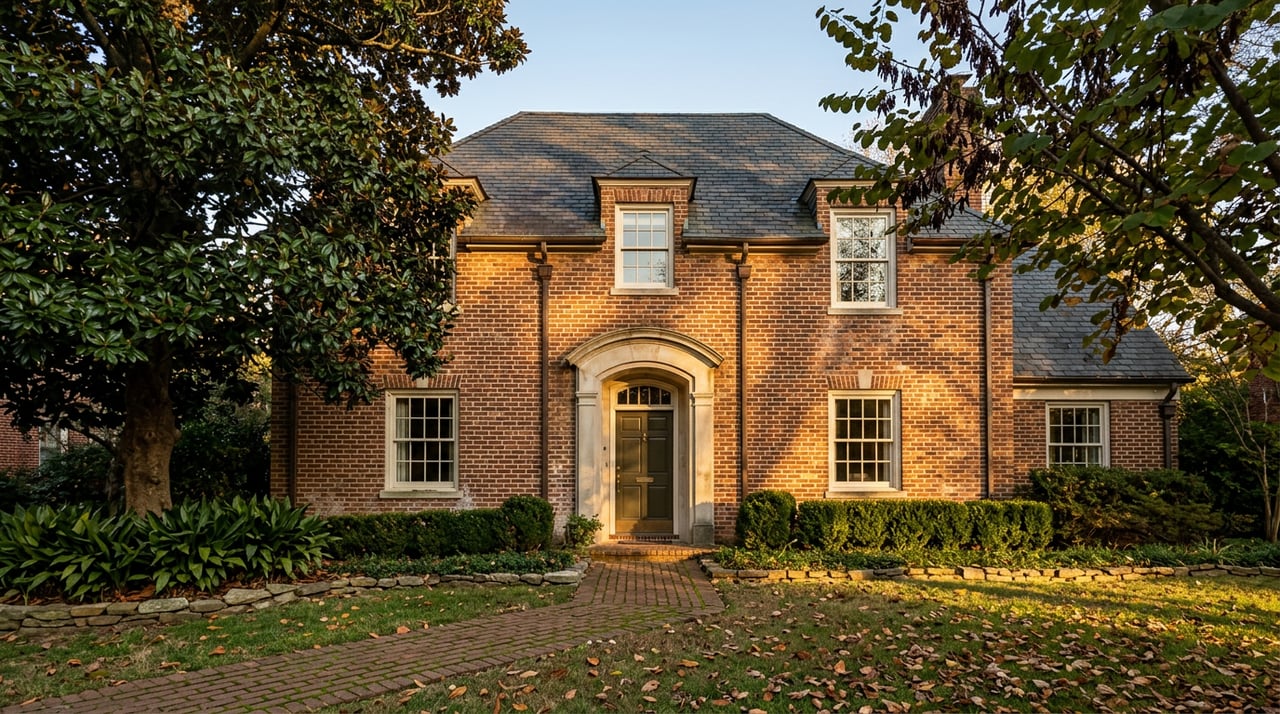
Two 1920s bungalows sit six blocks apart. Same footprint, same porch, same original oak floors. One is priced around $310,000. The other lists closer to $412,000. The buyer standing in both driveways wants to know what the extra hundred grand actually buys. Square footage? Kitchen? School zone?
None of the above. The difference is who has to approve the new front door.
That is the argument of this post. In Winston-Salem's historic inner ring, the price gap between West End and Ardmore is not about the houses. It is about the layer of review that governs one and not the other, and about a hospital-anchored demand pattern that keeps Ardmore's entry price lower than its scarcity would otherwise suggest. Once you see those two mechanisms, the neighborhood-level medians start behaving.
The overlay that changes the math
West End is a national historic district with 508 contributing buildings dating from about 1887 to 1930, built as one of the South's early streetcar suburbs. That national listing is honorary. What actually constrains ownership is a second, local designation on top of it: the West End Historic Overlay District, administered by the Forsyth County Historic Resources Commission.
If you own a house inside the overlay, exterior work that changes the appearance of the building requires a Certificate of Appropriateness before the permit gets pulled. New construction, demolition, and relocation are on the list. So are additions, window replacements, roofing changes, and landscape features visible from the street. Minor work can be signed off by staff. Larger changes go to the Commission at a monthly meeting. Applications run through the city's GeoCivix portal.
The Commission's November 2025 minor work docket gives a fair picture of what the process actually feels like in practice. A West End owner replacing failed tin shingles with asphalt and adding nineteen flush-mount solar panels on the rear roof passed staff review. A second owner installing a Tesla wall charger next to the electric meter on the rear elevation passed. A third owner installing a rear pergola went through with dimensional review. Nothing was blocked. Everything took time and paperwork, and every decision was measured against a written standard of what the district is supposed to look like.
Ardmore has no equivalent overlay. There is an Ardmore Historic District on the National Register with more than 2,000 contributing homes across roughly 600 acres, developed largely between the 1910s and 1940s. The Register plaque is real. The regulatory teeth are not there. An Ardmore owner who wants to swap windows, paint the brick, or add a rear addition deals with the standard city permitting process and nothing else.
That asymmetry is doing a lot of the pricing work most buyers attribute to charm.
What the friction does to price and pace
Winston-Salem's citywide median sale price sat around $275,000 in March 2026, up about 2.8% year over year, with homes moving in roughly 45 days. That is the number a portal shows you before you filter by neighborhood.
Filter to Ardmore and the picture tightens. The neighborhood-level median in February 2026 came in near $310,000, up about 5.1% year over year, at roughly $225 per square foot. Trailing twelve-month data pushes the median closer to $330,000 depending on the boundary used. Homes go pending in the mid-30-day range, and hot homes clear in under three weeks. That is a competitive but functional market for a buyer who arrives pre-approved and can decide inside a week.
West End's March 2026 median was reported around $412,000, a headline number that some listings sites carried as a 94% year-over-year jump. The footnote nobody quotes: that figure came from six recorded sales. Trailing twelve-month data on the same neighborhood shows a median closer to $305,000. Both numbers are technically accurate. Neither is a trend. The honest read is that West End's monthly medians will keep swinging because the annualized transaction count is small, and the overlay is a meaningful reason the count is small. Owners who have completed the renovation gauntlet tend to hold. Sellers who list often list at prices that reflect the improvements already approved and executed, which shifts the sample upward.
The practical translation for a buyer choosing between the two:
- In Ardmore, a similar 1920s home at a lower entry price gives you full latitude to renovate on your own schedule. Roof, HVAC, kitchen, windows, paint, addition. City permits, no design review.
- In West End, you are buying into a design regime as much as a house. The Commission is not adversarial. It is deliberate. Budget an extra layer of drawings, meetings, and specification for anything visible from the sidewalk, and price your renovation timeline in months rather than weeks.
That is the friction the median-price chart cannot show you.
The Ardmore demand anchor most listings hint at
Ardmore's entry price would be higher than it is if the neighborhood were priced purely on architecture and walkability. Two institutions keep it accessible: Atrium Health Wake Forest Baptist Medical Center and Brenner Children's Hospital sit at the northeast edge, and Novant Health Forsyth Medical Center sits at the southwest edge. Hawthorne Road threads between them. From most Ardmore blocks, either hospital is a five-minute drive or a genuinely walkable morning.
That geography produces a specific buyer pool. Medical residents on three-to-seven-year rotations. Nurses working nightshift schedules who want a short commute. Faculty at the Wake Forest School of Medicine. All of them show up ready to buy, and a meaningful share of the neighborhood's housing stock has been converted or configured for rental to that same population. The renter share in Ardmore runs materially higher than the citywide roughly 35% renter-occupied figure, which supports investor demand at the smaller end of the market and keeps competition intense on any two-to-three-bedroom bungalow under $300,000.
The commercial texture reinforces this. Ardmore Village anchors the middle of the neighborhood with Ardmore Coffee, P.B.'s Takeout, and Café Arthur's. Thruway Shopping Center at the north edge carries Trader Joe's, Chopt, The Carving Board, and The Loop. Little Richard's Bar-B-Que, Midtown Café, Nitsa's, and Nawab Indian all sit within a short drive. Miller Park and Hanes Park bookend the residential grid. The neighborhood functions without a car, which is a rare quality in a Piedmont Triad price band under $350,000.
Where Buena Vista fits, and where it doesn't
Buena Vista is often described in the same sentence as West End and Ardmore because the three neighborhoods share a rough era and a National Register listing. The pricing is not in the same conversation. The trailing twelve-month median in Buena Vista sat around $832,500, up roughly 23% year over year, with pending listings clustering near $985,000. Homes there move in about 37 days on market against a national average closer to 58.
Two structural differences explain the tier. First, Buena Vista's lots are larger and its houses are meaningfully bigger, with a stronger representation of 1920s-1940s estates designed for full-time domestic staff. Second, the neighborhood carries no local historic overlay, so the constraint that shapes West End does not apply here either. The pricing reflects scarcity of large historic lots in-town, not regulatory friction. A buyer comparing Buena Vista to West End is comparing two different products that share a zip code.
A friction ledger for buyers
Whichever of the three you are looking at, price these items into the offer rather than the post-close surprise column:
- Roof and HVAC age. A meaningful share of Ardmore homes were last mechanically updated in the early 2000s. Second-life systems are the norm, not the exception.
- Electrical panel and wiring. Ask specifically about the panel. A subset of homes in both Ardmore and West End still carry knob-and-tube runs in attics and behind plaster.
- Foundation and drainage. Streetcar-era lots often grade toward the house. Budget for grading, gutter capacity, and sump work.
- In West End specifically, price the Certificate of Appropriateness timeline into any renovation you plan in year one. Even approved projects take weeks of documentation.
- Rental use. If your model is house-hack or short-term rental, verify the current zoning and any active accessory dwelling rules before you write the offer. Ardmore's medical-adjacent rental demand is real, but the rules governing how you serve it change.
FAQ
Does West End's overlay affect interior renovations? No. The Historic Resources Commission's review authority is limited to exterior changes and site features that affect the character of the district. Kitchens, baths, and interior layout changes go through standard permitting.
If Ardmore has no overlay, can a buyer tear down and rebuild? Legally, yes, subject to city zoning and permit review. Practically, teardowns in Ardmore are rare because the lots are modest and the existing housing stock still trades at healthy per-foot numbers. The math for infill new construction rarely pencils against a well-executed renovation.
Is the West End market actually up 94% year over year? No. That figure reflects six recorded March 2026 sales measured against a small comparison base. Trailing twelve-month data shows a median much closer to $305,000. Treat any single-month neighborhood print in West End as a data point, not a trend.
If you are weighing a move into Winston-Salem's historic core, or trying to price a listing you already own in one of these districts, the mechanics behind the median matter more than the median itself. The team at Carolina Home Partners works these three neighborhoods every week and can walk you through what an offer, a renovation plan, or a listing strategy should actually look like at your address. Get Your Free Home Valuation to see where your home stands in today's Winston-Salem market.