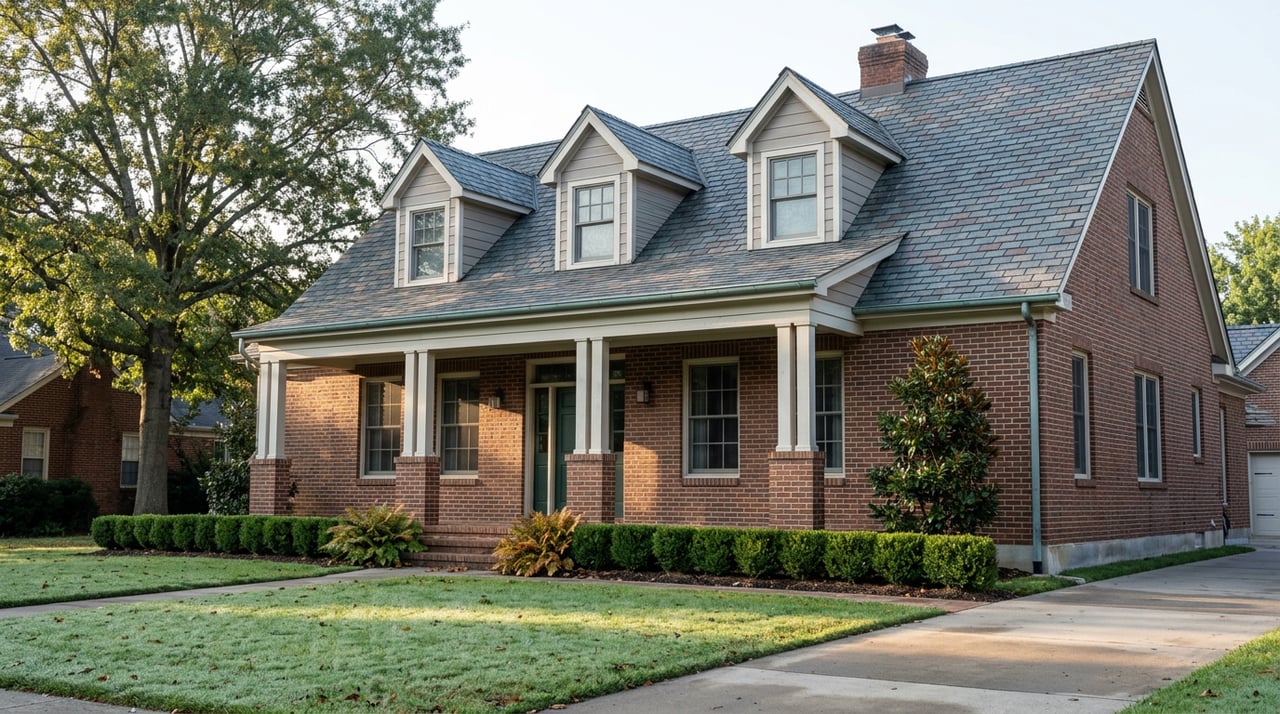
Picture two brick homes a few doors apart in Emerywood. Same era, same square footage, same asking price bracket. One closes on schedule. The other stalls for three weeks while an attorney, an insurance agent, and a plumber trade emails about a material nobody can see from the sidewalk. The difference was never the kitchen or the roof. It was what was already inside the walls before either buyer made an offer.
In High Point's older neighborhoods, the year a home was built predicts which plumbing system is behind the drywall, and that system, more than condition or price, often decides whether a due diligence period goes smoothly or turns into a negotiation. If you're buying or selling in Emerywood, Sherwood Forest, Fernwood, Westchester, Northwood, or anywhere along Kivett Drive or the Johnson Street corridor, knowing which build era your home falls into before the inspector shows up changes what you should expect and what you can reasonably ask for.
Three build eras, three different inspection reports
High Point's residential stock splits into three rough bands, and each one shows up differently on an inspection report.
Homes built before 1945, concentrated in the historic downtown corridor and Emerywood, were plumbed with cast iron drain systems and galvanized steel supply lines. Galvanized pipe corrodes from the inside out. It narrows over decades until flow slows to a trickle, and cast iron drains from this era are reaching the end of their practical service life simply from age.
Homes built between 1945 and 1970 make up the bulk of High Point's housing, including the slab-on-grade subdivisions that define much of Westchester. These homes may still have original galvanized lines or early copper, and many were never fitted with a pressure-reducing valve. That absence matters more than it sounds like it should. Without a PRV, water pressure can run higher than it should for decades, quietly accelerating wear on every fixture and connection in the house long before anyone notices a leak.
Homes built between 1978 and 1995 carry a different risk entirely: polybutylene supply lines, a gray (sometimes blue, black, or white) plastic tubing that briefly replaced copper across the Sun Belt before it started failing from the inside.
| Build Era | Common Materials | What Shows Up in Inspection | Negotiation Lever |
|---|---|---|---|
| Pre-1945 (downtown corridor, Emerywood) | Cast iron drains, galvanized steel supply | Reduced water flow, aging drain lines, root intrusion in old sewer laterals | Camera inspection of the lateral, repipe estimate as a credit |
| 1945-1970 (bulk of stock, Westchester) | Galvanized or early copper, often no PRV | Elevated water pressure, fixture wear, occasional pinhole leaks | Request for a PRV installation and pressure test |
| 1978-1995 | Polybutylene (PB) | Flagged material defect, insurance concerns | Full repipe before closing, or a price reduction sized to cover it |
Why the 1978-1995 band is a different kind of problem
A galvanized pipe or a missing PRV is a repair line item. Polybutylene is something else, because it doesn't just affect the plumbing bill, it affects whether the home can be insured at all.
Polybutylene reacts with the chlorine and chloramine used to treat nearly every municipal water supply, and the pipe develops micro-fractures from the inside that eventually lead to sudden ruptures rather than slow leaks. The failures were significant enough to produce one of the larger class action settlements in U.S. history, Cox v. Shell Oil, which resolved for roughly $950 million in 1995. That fund covered replacement costs for homeowners who filed in time, but the window to file closed years ago. Today, the cost of a polybutylene system sits entirely with whoever owns the home, and it becomes a line item at the negotiating table instead.
The insurance consequence is the part that surprises most people. Many carriers decline to write a new homeowner's policy on a house with known PB plumbing, or they write it with a specific exclusion for water damage caused by plumbing failure. Lenders can complicate things further, since FHA, VA, and some conventional programs may require the plumbing to be replaced before they'll fund the loan. A buyer who assumed this was a cosmetic-era home from the late twentieth century can find out during due diligence that the real issue is whether the deal can be financed and insured at all.
What North Carolina makes you say out loud
North Carolina law requires sellers to disclose known material defects on the Residential Property and Owners' Association Disclosure Statement, and polybutylene plumbing qualifies as exactly that kind of defect. If you know your home has PB pipe and you don't disclose it, you're not just risking a renegotiation, you're risking a legal problem after closing.
The practical response for sellers in an older High Point home is to get ahead of it rather than wait for the buyer's inspector to find it. A pre-listing plumbing assessment, with a written estimate for replacement in hand, lets you negotiate from information instead of reacting to a surprise mid-contract.
What the negotiation actually looks like
When a home inspection turns up polybutylene or aging galvanized pipe in a High Point sale, there are usually three paths, and which one makes sense depends on timeline and how close the seller is to closing.
The first is a full repipe before closing, which resolves the insurance and lending questions cleanly but takes time. The second is a price reduction or seller credit sized to cover the eventual replacement, which is common enough that many buyers simply build it into their initial offer once PB or heavily corroded galvanized pipe turns up in the inspection report. The third, for buyers who are comfortable with the risk and the eventual cost, is to proceed as-is with the credit negotiated up front rather than the repair completed.
None of these paths are unusual once a plumbing issue surfaces. What catches people off guard is being blindsided by it in the first place, which is why knowing the build era of the home you're buying or selling matters before you're three weeks into due diligence.
The six weeks that complicate timing this fall
There's a scheduling wrinkle specific to High Point that doesn't show up in a home inspection report but affects anyone planning a repipe or a renovation around a sale. High Point Market, the twice-yearly furniture trade show that fills the city's hotels, showrooms, and streets, runs Fall Market from October 17 through 21 this year. Homeowners and short-term rental owners across the city plan to have projects finished before that window opens, not during it, because contractor availability and lodging demand both tighten significantly for those weeks.
If you're an Emerywood, Sherwood Forest, or Fernwood seller planning to address galvanized pipe or a PRV issue before listing this fall, or a Westchester buyer negotiating a repipe credit into your contract, the practical move is to schedule the work now, ahead of mid-October, rather than assume a plumber can turn it around during Market week itself. Crawl space homes, common throughout Emerywood, Sherwood Forest, and Fernwood, and slab-on-grade homes typical of Westchester's postwar subdivisions, also require different access points and repair methods, which is worth confirming with a licensed plumber before you price the job rather than after.
The thesis, restated
The build year on a High Point listing tells you more than architectural style. It tells you which of three plumbing systems is behind the walls, and that system predicts what an inspection will find, whether the home can be easily insured, and what the negotiation will actually be about. Knowing which band your home falls into before you list or make an offer means you're negotiating from information rather than reacting to a surprise on day fourteen of due diligence.
FAQ
How do I find out what year my High Point home was built? Your county tax parcel record lists a year-built field for every property, which is the fastest way to know which of the three bands applies before you ever schedule an inspection.
Can I tell if I have polybutylene without opening a wall? Look for gray, blue, black, or white flexible plastic tubing near the water heater, at the point where the main line enters the home, or in an accessible crawl space. It's often stamped "PB2110" along its length, though a licensed plumber should confirm it rather than a visual guess.
Does every home built between 1978 and 1995 in High Point have polybutylene? No. Some builders in the Piedmont continued using copper through that period. It's common enough in the era that it's worth confirming with a plumber rather than assuming either way before you write or accept an offer.
What if the inspection finds galvanized pipe but there's no active leak yet? Galvanized pipe corrodes from the inside on a predictable timeline, not a guaranteed one, so the absence of a current leak doesn't mean the pipe is fine. Buyers in this situation often ask for a camera inspection of the sewer lateral and a supply line assessment before deciding whether to request a credit.
If you're weighing a purchase in one of High Point's older neighborhoods, or you're getting a pre-1995 home ready to list before the fall market picks up, Carolina Home Partners can walk through what your build era likely means for your inspection and your timeline. Browse current listings on our High Point homes for sale page, or get a free home valuation to see where your property stands before you make your next move.