Burlington sits in Alamance County between Greensboro and the Research Triangle, giving it a practical location for buyers who want Piedmont Triad access without the price pressure of larger nearby cities. The city has deep railroad and textile roots, a historic downtown depot, a restored Dentzel Carousel, major shopping at Alamance Crossing, and lake recreation at Lake Mackintosh. It feels established, convenient, and still approachable for buyers comparing central North Carolina communities.
For homebuyers, Burlington offers a broad mix of housing. There are historic homes near downtown, established neighborhoods around South Church Street and West Davis Street, newer communities near Alamance Crossing, lake-adjacent homes near Lake Mackintosh, and more affordable options on the city’s east and north sides. Prices remain more accessible than many larger North Carolina metros, while I-40/I-85, Amtrak, and LINK Transit add useful mobility.
This guide covers the history, lifestyle, market data, schools, amenities, neighborhoods, and investment picture for Burlington, North Carolina.
| Key Facts: Burlington, NC | |
|---|---|
| County | Alamance County, with small portions extending toward Guilford County |
| Community Type | Incorporated city and largest city in Alamance County |
| Location | Central North Carolina, between Greensboro and Durham along the I-40/I-85 corridor |
| Population | Approximately 61,496 residents, based on the 2025 U.S. Census estimate |
| City Area | Approximately 30.10 square miles of land |
| Median Age | Approximately 40.1 years |
| Median Household Income | Approximately $56,880 |
| Historic Origin | Founded around the North Carolina Railroad repair shops as “Company Shops” in 1854; later renamed Burlington |
| Primary Roads | I-40/I-85, US-70, NC 49, NC 62, NC 87, University Drive, and Huffman Mill Road |
| Public Transit | LINK Transit local bus service and Amtrak service from Burlington Station |
| Major Recreation | Burlington City Park, Lake Mackintosh, Fairchild Park, North Park, and nearby Haw River access |
| School District | Alamance-Burlington School System |
| Nearby Cities | Graham, Elon, Mebane, Greensboro, Whitsett, Gibsonville, and Durham |
| ZIP Codes | 27215, 27217, and nearby surrounding ZIP code areas |
Burlington Lifestyle Snapshot
An editorial snapshot of the city’s strongest lifestyle attributes, not a statistical ranking.
Burlington is the commercial and population center of Alamance County. It has the everyday infrastructure buyers often want: a hospital, shopping centers, public schools, local parks, restaurants, public transit, train service, and quick highway access. Compared with Greensboro or Durham, Burlington feels smaller and easier to navigate, but it still has enough amenities to support day-to-day life without leaving town.
The city’s character changes by area. Downtown Burlington has the Historic Depot, older commercial buildings, and a growing small-business scene. West Burlington and the Alamance Crossing area feel more suburban and retail-oriented. East Burlington carries more of the city’s older industrial and mill-town history. Southern Burlington opens toward Lake Mackintosh, Alamance Regional Medical Center, and newer residential pockets.
Burlington is one of the most practical “middle-ground” markets in central North Carolina. It gives residents access to Greensboro, Durham, Chapel Hill, and the broader Triad-Triangle corridor while keeping local housing and daily costs more approachable.
Burlington’s story began with the railroad. In the 1850s, local residents worked to bring the North Carolina Railroad through the area, and the railroad later chose the site for its repair and maintenance shops. The settlement became known as Company Shops in 1854, and for decades the railroad shaped the local economy.
When the railroad shops closed in 1886, the community had to reinvent itself. Burlington’s next chapter came through textile and hosiery manufacturing. Mills and hosiery plants brought jobs, neighborhoods, and a new industrial identity. The city eventually became known as “The Hosiery Center of the South,” a phrase that still reflects its manufacturing heritage.
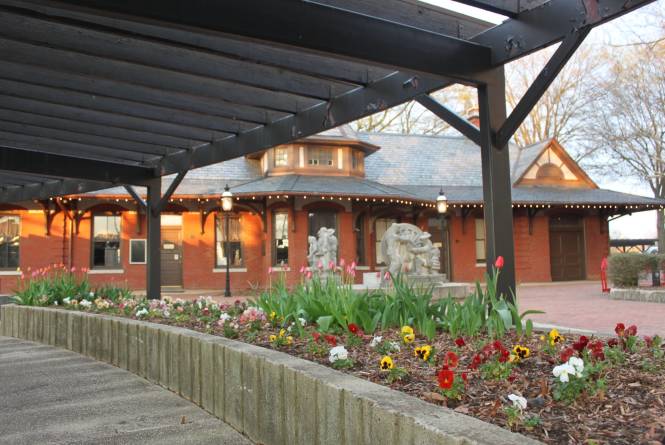
Today, Burlington’s history is visible in places like the Historic Depot, Company Shops Station, old mill village areas, and downtown civic spaces. The Historic Depot was renovated during Burlington’s Centennial Celebration and now serves as a community landmark, event space, and visitor information point. The city’s restored Dentzel Carousel at Burlington City Park adds another layer of heritage, giving Burlington one of its most recognizable family-friendly icons.
Burlington’s identity has always been tied to adaptation. It grew from railroad repair shops, shifted into textiles and hosiery, and now serves as a regional center for healthcare, shopping, logistics, education, and residential growth.
Burlington is positioned directly on the I-40/I-85 corridor, one of the most important east-west routes in North Carolina. Greensboro is west of the city, while Durham, Chapel Hill, and Raleigh sit to the east. This location makes Burlington useful for commuters, regional workers, college families, healthcare employees, and buyers who travel between the Triad and Triangle.
| Destination | Approximate Distance / Time | Route |
|---|---|---|
| Downtown Greensboro | 22 miles / 25–30 min | I-40/I-85 west |
| Durham | 35 miles / 35–45 min | I-40/I-85 east to I-40 |
| Chapel Hill | 32–38 miles / 40–50 min | NC 54 or I-40 east connections |
| Raleigh | 55–60 miles / 60–75 min | I-40 east |
| Piedmont Triad International Airport | 32–35 miles / 35–45 min | I-40/I-85 west and airport connectors |
| Burlington Station | In town; Amtrak and NC By Train service | Piedmont and Carolinian routes |
Burlington also has public transit through LINK Transit, which serves Burlington, Elon, Gibsonville, Mebane, Haw River, Green Level, Alamance Community College, and county office areas. LINK Transit is useful for local errands, school access, work trips, and connections around the city. Burlington’s Amtrak station connects the city to Greensboro, High Point, Charlotte, Durham, Cary, and Raleigh through the Piedmont and Carolinian routes.
Most residents still rely on a car, especially outside the downtown and central corridors. But the combination of interstate access, local bus service, and passenger rail gives Burlington more transportation flexibility than many similarly sized North Carolina cities.
Burlington’s housing market remains one of the city’s strongest advantages. Prices are generally lower than Greensboro, Durham, Chapel Hill, and Raleigh, while the city still offers regional access and strong everyday amenities. Market conditions vary by neighborhood, with West Burlington and newer communities often commanding higher prices than older or more centrally located homes.
| Property Segment | Market Character | Buyer Opportunity |
|---|---|---|
| Historic and older homes | Common near downtown, West Davis Street, and established central areas | Good fit for buyers who value character, walkability, and renovation potential |
| West Burlington homes | Often higher-priced due to shopping access, newer amenities, and proximity to Elon and Alamance Crossing | Strong option for buyers prioritizing convenience and resale strength |
| Lake Mackintosh area | More suburban and scenic, with access to recreation and newer residential settings | Appeals to buyers who want outdoor access and a quieter residential feel |
| East and North Burlington | More affordable, with older housing stock and investor activity | Useful for first-time buyers and value-focused investors |
| Newer subdivisions | Concentrated in select growth pockets near major roads and shopping corridors | Best for buyers who want modern layouts without moving into a larger metro |
For buyers, Burlington’s market rewards neighborhood-specific research. A home near Alamance Crossing or Lake Mackintosh may behave differently from one near downtown or East Burlington. Pricing also shifts by school assignment, commute route, renovation level, and proximity to I-40/I-85. The city remains attractive because even higher-demand pockets can still feel reasonable compared with larger North Carolina metros.
Burlington’s real estate value is tied to access. Buyers are not just purchasing a home in Alamance County. They are buying into a location that can support Triad jobs, Triangle commutes, Elon University connections, and everyday local convenience.
Burlington has a balanced, everyday lifestyle. It is not as fast-paced as Greensboro or Durham, but it has more retail, healthcare, and transportation infrastructure than smaller towns nearby. Residents can spend a morning at Lake Mackintosh, take kids to the City Park carousel, shop at Alamance Crossing, catch local baseball at Burlington Athletic Stadium, or head into Greensboro or Durham for a bigger night out.
The restored Dentzel Menagerie Carousel is one of Burlington’s signature attractions. Built around 1906 to 1910, it features hand-carved animals and now sits inside a modern pavilion at Burlington City Park.
Lake Mackintosh is a major outdoor asset just south of Burlington. The lake covers more than 1,150 acres and offers fishing, kayaking, rowboat rentals, boat ramps, picnic sites, a playground, and bank or pier fishing.
Downtown centers around the Historic Depot, local restaurants, small businesses, events, and civic spaces. It gives the city a historic center that feels different from the newer retail corridors.
Alamance Crossing is the area’s major open-air shopping and dining destination, with anchor retailers, restaurants, entertainment, and quick access from I-40/I-85.
Fairchild Park includes Burlington Athletic Stadium, home of the Burlington Sock Puppets, plus a BMX bike track, softball fields, tennis and pickleball courts, playgrounds, and a walking trail.
The Haw River corridor adds paddling, hiking, and nature access nearby. It is especially valuable for residents who want outdoor options beyond city parks and neighborhood green space.
Burlington has a stronger amenity base than many cities of similar size. Alamance Regional Medical Center anchors local healthcare. Alamance Crossing and Huffman Mill Road provide major retail. Downtown Burlington adds local character, restaurants, and event space. Parks and lakes fill in the recreation side, while Elon University and Alamance Community College add nearby education and cultural access.
| Category | What’s Available |
|---|---|
| Grocery | Harris Teeter, Food Lion, Walmart, Target grocery options, Aldi, and other everyday grocery access across Burlington and nearby Graham or Elon |
| Dining | Local downtown restaurants, casual chains near Alamance Crossing, coffee shops, breweries, diners, and easy access to Elon and Graham dining options |
| Healthcare | Cone Health Alamance Regional Medical Center on Huffman Mill Road, plus urgent care, primary care, specialty offices, dental care, and nearby Greensboro medical networks |
| Shopping | Alamance Crossing, Holly Hill Mall area, Huffman Mill Road retail, downtown boutiques, home improvement stores, and everyday service businesses |
| Recreation | Burlington City Park, Lake Mackintosh, Fairchild Park, North Park, Lake Cammack, Stoney Creek Marina, athletic fields, playgrounds, trails, and nearby Haw River access |
| Culture & Events | Historic Depot events, Paramount Theater, downtown festivals, carousel events, local sports, Elon University performances, and regional events in Greensboro and Durham |
| Education | Alamance-Burlington School System, Alamance Community College nearby in Graham, and Elon University just west of Burlington |
Burlington’s daily convenience is one of its biggest selling points. Residents can handle groceries, healthcare, shopping, schools, parks, and regional travel without depending fully on a larger metro.
Burlington’s residential landscape is varied. Some buyers focus on the historic core and older tree-lined streets. Others prefer newer subdivisions near Alamance Crossing, lake access near Lake Mackintosh, or value-oriented homes in established central and eastern neighborhoods. The right area depends on whether the buyer values charm, convenience, affordability, newer construction, or commuter access most.
Historic buildings, local businesses, the depot, and older homes give downtown a more traditional city feel. It works well for buyers who want character and easier access to events and local dining.
One of the most convenient parts of the city, with strong access to Alamance Crossing, Elon, I-40/I-85, restaurants, and medical services. Homes here often appeal to resale-minded buyers.
A quieter residential setting near the lake, marina, parks, and Huffman Mill Road. This area appeals to buyers who want recreation and suburban comfort close together.
Known for older homes, mature trees, and established residential character. It is a good fit for buyers who appreciate architecture, renovation potential, and central access.
A more affordable and historically industrial side of the city, with older housing stock and investor interest. Buyers here often prioritize value and long-term upside.
A retail-driven growth pocket with newer housing nearby, quick highway access, and strong convenience for shoppers, commuters, and renters.
Burlington is served by the Alamance-Burlington School System, which serves more than 22,000 students across Alamance County. The district includes traditional public schools, early college options, career and technical education, global programs, cultural arts, and specialty pathways. School assignments can vary by address, so buyers should verify zones directly with the district before purchasing.
| School | Type / Grades | Notes |
|---|---|---|
| Walter M. Williams High School | Public, 9–12 | Located on South Church Street in Burlington; one of the city’s primary high schools and part of the Alamance-Burlington School System |
| Hugh M. Cummings High School | Public, 9–12 | Located on North Mebane Street in Burlington; serves students in the city and surrounding ABSS attendance areas |
| Alamance-Burlington Early College | Public choice program | District early college option connected to advanced academic and college-readiness pathways |
| Turrentine Middle School | Public, 6–8 | One of the middle school options serving Burlington-area families; zone assignment should be confirmed by address |
| Grove Park Elementary School | Public, K–5 | Elementary option within Burlington; neighborhood assignment depends on the exact property location |
| Highland Elementary School | Public, K–5 | Another Burlington elementary option within ABSS; families should verify current attendance boundaries before purchase |
Private preschool, daycare, and faith-based childcare options are available throughout Burlington, Elon, Graham, and surrounding Alamance County. Families may also consider nearby Alamance Community College and Elon University for continuing education, enrichment, and local cultural programming.
Burlington school assignments should always be checked by property address. ABSS serves the full county, and boundaries can vary even between nearby neighborhoods.
Burlington’s investment case is built on affordability, location, and steady regional demand. The city sits between the Triad and Triangle, has its own healthcare and retail anchors, and offers lower acquisition costs than many larger North Carolina markets. That combination makes it attractive for long-term rental investors, first-time buyers, renovation projects, and buyers looking for a lower-cost base with regional access.
| Market Snapshot | |
|---|---|
| Median sale price | Approximately $245K in March 2026 |
| YoY sale price change | Down approximately 7.5% year-over-year |
| Average days on market | Approximately 49 days |
| ZIP 27215 median sale price | Approximately $315K in March 2026 |
| Average rent | Approximately $1,350 in May 2026 |
| Investment Drivers | |
|---|---|
| Regional access | I-40/I-85 connects Burlington to Greensboro, Durham, and Raleigh |
| Healthcare anchor | Alamance Regional Medical Center supports jobs and rental demand |
| Retail strength | Alamance Crossing and Huffman Mill Road support daily convenience |
| Housing variety | Older homes, newer subdivisions, rentals, and renovation opportunities |
| Education access | ABSS, Alamance Community College, and nearby Elon University add demand layers |
The strongest investment opportunities often depend on property condition and location. Older homes near downtown can offer renovation upside. Homes near Alamance Crossing or the hospital may support rental demand from workers and commuters. More affordable properties in East or North Burlington can offer lower entry costs, though due diligence on condition, neighborhood trends, and tenant demand is important.
Burlington is not a single-note investment market. Its best opportunities come from matching the property type to the strategy: long-term rental, renovation, owner-occupant resale, or convenience-driven suburban demand.
Burlington appeals to buyers who want a practical North Carolina home base. It is close enough to larger cities for work, travel, and entertainment, but it still has its own identity, lower price points, and everyday amenities. The city works especially well for people who want affordability without feeling disconnected from the larger regional economy.
Burlington offers more approachable pricing than many larger North Carolina markets while still providing healthcare, shopping, transit, and highway access.
Families benefit from parks, local schools, City Park, the carousel, sports facilities, and a daily rhythm that feels easier than larger metros.
I-40/I-85 makes Greensboro, Durham, Chapel Hill, and Raleigh accessible, especially for hybrid workers who do not need to commute every day.
The city offers manageable size, local healthcare, parks, shopping, and access to larger medical and cultural resources in Greensboro and the Triangle.
Lake Mackintosh, Lake Cammack, Stoney Creek, parks, trails, and the Haw River give residents more recreation options than many inland cities of similar size.
Lower acquisition costs, rental demand, regional access, and varied housing stock make Burlington worth watching for long-term value plays.
Where is Burlington, NC located?
Burlington is in Alamance County in central North Carolina. It sits along the I-40/I-85 corridor between Greensboro and Durham, making it part of the broader Triad-Triangle connection.
Is Burlington, NC a good place to live?
Burlington can be a good fit for buyers who want affordability, highway access, shopping, healthcare, parks, and a manageable city size. It is especially practical for people who want access to Greensboro or the Triangle without paying larger-metro prices.
What is Burlington, NC known for?
Burlington is known for its railroad history, textile and hosiery heritage, Historic Depot, Burlington City Park Carousel, Alamance Crossing, Lake Mackintosh, and central location between Greensboro and the Triangle.
How far is Burlington from Greensboro and Durham?
Burlington is about 22 miles east of Greensboro and roughly 35 miles west of Durham. Typical drive times are about 25 to 30 minutes to Greensboro and 35 to 45 minutes to Durham, depending on traffic and starting point.
Does Burlington have public transportation?
Yes. Burlington has LINK Transit bus service, which serves Burlington, Elon, Gibsonville, Mebane, Haw River, Green Level, Alamance Community College, and Alamance County office areas. The city also has Amtrak service through Burlington Station.
What are the schools like in Burlington?
Burlington is served by the Alamance-Burlington School System. Local schools include Walter M. Williams High School, Hugh M. Cummings High School, Turrentine Middle School, Grove Park Elementary, Highland Elementary, and districtwide choice programs. Buyers should verify school assignments by property address.
What is the real estate market doing in Burlington?
As of March 2026, Redfin reported a Burlington median sale price of about $245,000, down 7.5% year-over-year, with homes selling in an average of 49 days. Conditions vary by neighborhood, especially between West Burlington, downtown, Lake Mackintosh, and more affordable older areas.
What are the best areas to consider in Burlington?
Popular settings include downtown Burlington for historic character, West Burlington for convenience, the Lake Mackintosh area for recreation, West Davis Street for older homes, East Burlington for value, and the Alamance Crossing area for shopping and highway access.
86,528 people live in Burlington, where the median age is 38.8 and the average individual income is $32,432. Data provided by the U.S. Census Bureau.
Total Population
Median Age
Population Density Population Density This is the number of people per square mile in a neighborhood.
Average individual Income
There's plenty to do around Burlington, including shopping, dining, nightlife, parks, and more. Data provided by Walk Score and Yelp.
Explore popular things to do in the area, including Five Points Grocery & Grill, Indian Valley Mini Mart, and B Mart.
| Name | Category | Distance | Reviews |
Ratings by
Yelp
|
|---|---|---|---|---|
| Dining | 0.45 miles | 1 review | 5/5 stars | |
| Dining | 1.23 miles | 1 review | 5/5 stars | |
| Dining | 1.24 miles | 0 reviews | 0/5 stars | |
| Dining | 1.68 miles | 0 reviews | 0/5 stars | |
| Dining | 1.81 miles | 0 reviews | 0/5 stars | |
| Dining | 1.81 miles | 3 reviews | 4.3/5 stars | |
| Dining | 2.22 miles | 0 reviews | 0/5 stars | |
| Dining | 2.28 miles | 0 reviews | 0/5 stars | |
| Dining | 2.43 miles | 0 reviews | 0/5 stars | |
| Dining | 2.47 miles | 0 reviews | 0/5 stars | |
| Dining | 2.51 miles | 0 reviews | 0/5 stars | |
| Nightlife | 1.19 miles | 0 reviews | 0/5 stars | |
| Nightlife | 2.21 miles | 0 reviews | 0/5 stars | |
| Nightlife | 2.38 miles | 0 reviews | 0/5 stars | |
| Beauty | 1.81 miles | 0 reviews | 0/5 stars | |
| Beauty | 1.81 miles | 0 reviews | 0/5 stars | |
| Beauty | 1.81 miles | 0 reviews | 0/5 stars | |
| Beauty | 1.81 miles | 0 reviews | 0/5 stars | |
| Beauty | 1.89 miles | 0 reviews | 0/5 stars | |
| Beauty | 1.9 miles | 0 reviews | 0/5 stars | |
| Beauty | 2.2 miles | 0 reviews | 0/5 stars | |
| Beauty | 2.23 miles | 0 reviews | 0/5 stars | |
| Beauty | 2.33 miles | 0 reviews | 0/5 stars | |
| Beauty | 2.51 miles | 0 reviews | 0/5 stars | |
|
|
||||
|
|
||||
|
|
||||
|
|
||||
|
|
||||
|
|
Burlington has 34,686 households, with an average household size of 2.505. Data provided by the U.S. Census Bureau. Here’s what the people living in Burlington do for work — and how long it takes them to get there. Data provided by the U.S. Census Bureau. 86,528 people call Burlington home. The population density is 541 and the largest age group is Data provided by the U.S. Census Bureau.
Total Population
Population Density Population Density This is the number of people per square mile in a neighborhood.
Median Age
Men vs Women
Population by Age Group
0-9 Years
10-17 Years
18-24 Years
25-64 Years
65-74 Years
75+ Years
Education Level
Total Households
Average Household Size
Average individual Income
Households with Children
With Children:
Without Children:
Marital Status
Blue vs White Collar Workers
Blue Collar:
White Collar: